
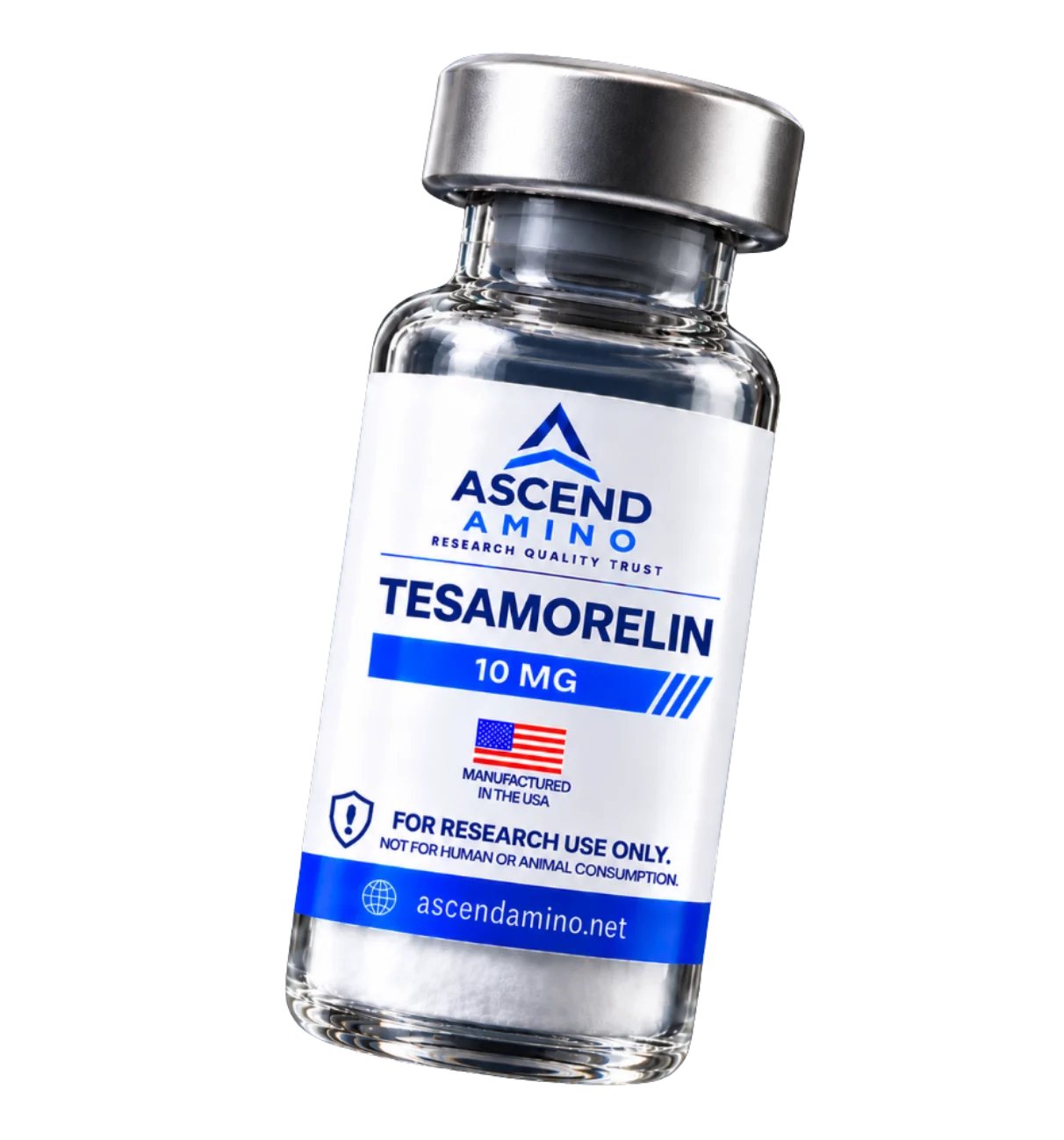
Tesamorelin 10mg

$58.00
Tesamorelin 10mg is a synthetic peptide based on growth hormone-releasing hormone (GHRH). It is studied for its interaction with GHRH receptors and its role in growth hormone signaling pathways. This product is presented for controlled research purposes, with its identity, purity, and specifications subject to supplier documentation. It is not intended for self-administration or unsupervised human use.
Tesamorelin 10mg – Understanding This Synthetic Research Peptide
Tesamorelin 10mg is a synthetic peptide associated with scientific research into growth hormone-releasing hormone (GHRH) and endocrine signaling. Its molecular structure is based on GHRH, a naturally occurring hormone involved in regulating growth hormone release from the pituitary gland.
Because of its relationship with this important signaling pathway, Tesamorelin has been investigated in clinical and biochemical research. Understanding its structure, biological background, and research context provides useful insight into why this peptide remains relevant in peptide science.
What Is Tesamorelin?
Tesamorelin is a synthetic peptide analogue of growth hormone-releasing hormone. It consists of 44 amino acids and includes a structural modification designed to improve its stability compared with the naturally occurring GHRH sequence.
GHRH is produced in the hypothalamus and plays a role in regulating growth hormone secretion. Tesamorelin has been studied for its ability to interact with GHRH receptors, which are involved in signaling processes that influence the release of growth hormone.
It is important to distinguish the scientific properties of a compound from claims about its effects in individuals. Research findings do not establish that every product sold under the Tesamorelin name has the same formulation, quality, or approved use.
How Tesamorelin Relates to Growth Hormone Signaling
Growth hormone is involved in several physiological processes, including growth, metabolism, and the regulation of other hormones. Its release is controlled by a complex endocrine system involving the hypothalamus and pituitary gland.
GHRH binds to receptors on pituitary cells and contributes to signaling that regulates growth hormone secretion. Tesamorelin is studied in relation to this receptor pathway.
Researchers examine this interaction to better understand peptide signaling, receptor activity, and endocrine regulation. These scientific areas require controlled study and should not be confused with evidence that an unverified research product is suitable for personal use.
Tesamorelin 10mg and Scientific Research
The 10mg label identifies the stated quantity of the product. It does not independently confirm its purity, concentration, formulation, or suitability for a particular experiment.
Research involving Tesamorelin may explore:
- GHRH receptor interactions
- Growth hormone signaling pathways
- Peptide structure and stability
- Endocrine regulation
- Analytical identification and characterization
These areas represent research interests rather than guaranteed outcomes or recommendations for treatment.
Understanding the Importance of Peptide Quality
Quality documentation is essential when evaluating any research peptide. Researchers should look for clear product identification, batch information, analytical testing, and supporting documentation from the supplier.
A certificate of analysis may provide information about identity and measured purity, depending on the testing performed. Independent verification can help establish whether a material meets the specifications required for a particular laboratory investigation.
The product’s actual composition and physical presentation should always be confirmed rather than assumed from its name or labeled quantity.
Tesamorelin and Its Medical Research Background
Tesamorelin has an established prescription medical application in certain jurisdictions and specific approved formulations. However, that approval does not automatically apply to every product labeled Tesamorelin 10mg or to products marketed as research compounds.
The distinction between an approved prescription formulation and an independently sourced research product is important. Research materials should not be treated as interchangeable with regulated medicines.
Responsible Research and Handling
Tesamorelin 10mg is presented here as a research-focused product. It is not intended for human or veterinary consumption, self-injection, diagnosis, treatment, or prevention of disease.
Only qualified personnel should handle research materials in appropriate laboratory environments and follow applicable institutional and regulatory requirements. Product identity, documentation, and handling conditions should be reviewed before any laboratory investigation.
Final Overview
Tesamorelin 10mg is a synthetic peptide analogue of GHRH studied for its interaction with growth hormone signaling pathways. Its relationship with endocrine research makes it relevant to investigations involving peptide structure, receptor activity, and biological signaling.
When evaluating Tesamorelin for laboratory research, prioritize accurate product identification, transparent supplier information, and appropriate quality documentation. These considerations help support responsible and well-documented scientific work.
Be the first to review “Tesamorelin 10mg”
Related products




Reviews
There are no reviews yet.