
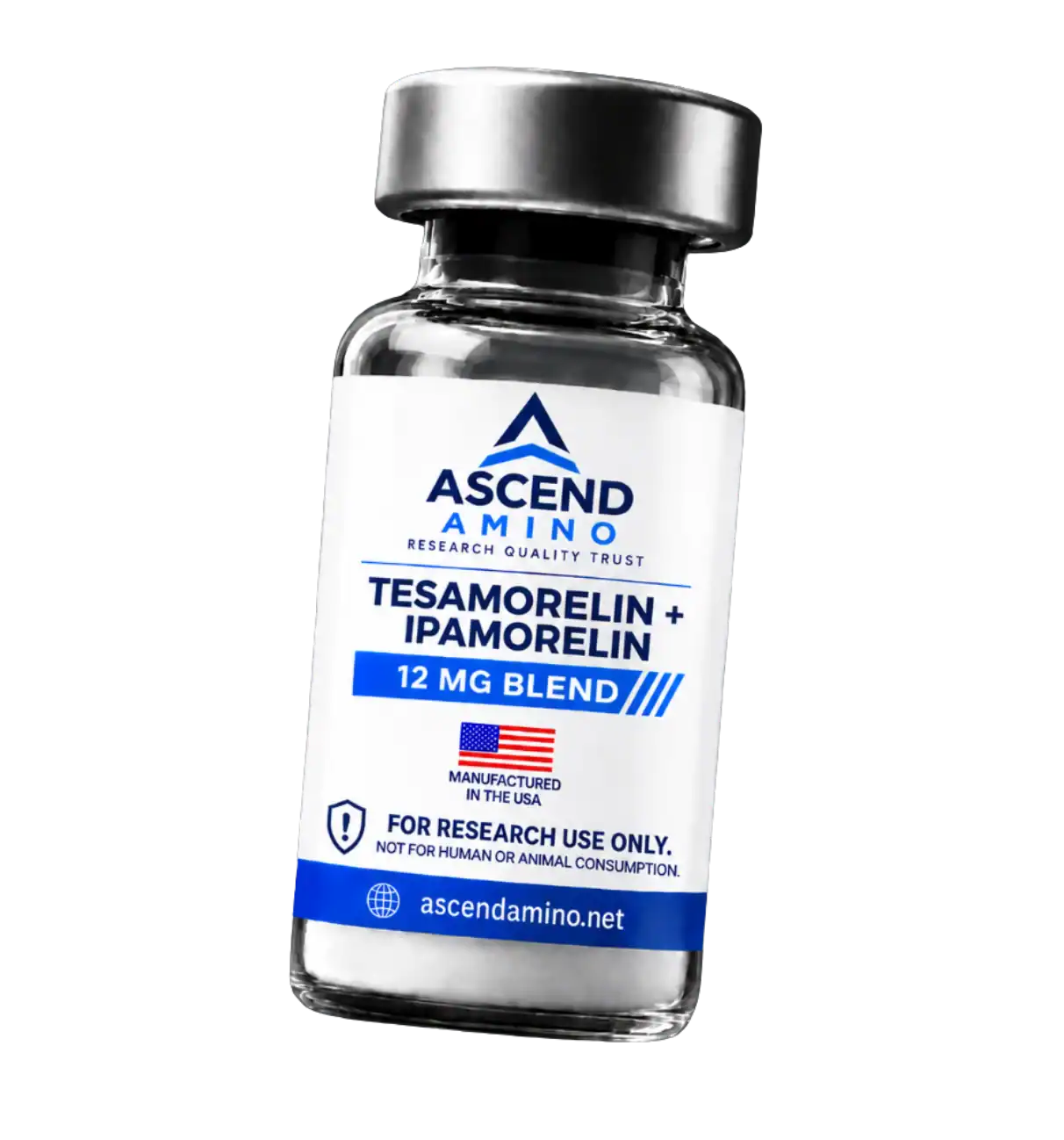
Tesamorelin (10MG) / Ipamorelin (2MG) Research Blend

$68.99
Tesamorelin (10MG) / Ipamorelin (2MG) Research Blend is a research-labeled peptide combination featuring two distinct peptide compounds in one product. Formulated with 10 mg of Tesamorelin and 2 mg of Ipamorelin, this research blend is intended for laboratory investigation and scientific study. Explore its composition, product specifications, analytical documentation, and research considerations.
Tesamorelin (10MG) / Ipamorelin (2MG) Research Blend: Product Information and Research Overview
The Tesamorelin (10MG) / Ipamorelin (2MG) Research Blend is a research-labeled peptide combination containing two distinct compounds: Tesamorelin and Ipamorelin. With a labeled composition of 10 mg Tesamorelin and 2 mg Ipamorelin, this product brings together two peptides commonly discussed in scientific literature involving growth hormone signaling pathways.
Understanding the individual characteristics of these compounds, their research background, product specifications, and quality documentation is important when evaluating peptide research materials.
What Is the Tesamorelin and Ipamorelin Research Blend?
The Tesamorelin (10MG) / Ipamorelin (2MG) Research Blend combines two peptide compounds with different molecular structures and research backgrounds.
Tesamorelin is a synthetic peptide related to growth hormone-releasing hormone (GHRH). Ipamorelin is a synthetic pentapeptide studied for its interaction with growth hormone secretagogue receptors.
Although both compounds are associated with research into growth hormone regulation, they have distinct mechanisms of action. Their combination in a research-labeled product does not establish that they produce a particular combined effect.
Understanding Tesamorelin (10MG)
Tesamorelin is a synthetic peptide analogue of growth hormone-releasing hormone. It has been studied for its ability to stimulate the pituitary gland’s release of growth hormone through GHRH-related signaling.
Tesamorelin also has an established medical context: prescription tesamorelin products have been approved in certain jurisdictions for specific medical indications. However, those approvals apply to particular regulated formulations and uses, not automatically to research blends.
From a scientific perspective, Tesamorelin is relevant to studies examining endocrine signaling, peptide structure, and growth hormone regulation.
Understanding Ipamorelin (2MG)
Ipamorelin is a synthetic pentapeptide classified as a growth hormone secretagogue. It has been investigated for its interaction with the ghrelin receptor, also known as the growth hormone secretagogue receptor.
Its distinct molecular structure makes it an important subject in research examining receptor activity and peptide signaling.
Ipamorelin and Tesamorelin are not interchangeable. They interact with different signaling pathways, which is why accurate compound identification and documentation are important when evaluating a research blend.
Product Composition and Specifications
The labeled composition of this research blend includes:
- Tesamorelin: 10 mg
- Ipamorelin: 2 mg
- Product format: Combined research peptide blend
- Total labeled peptide quantity: 12 mg
These specifications provide a basic reference for product identification and laboratory inventory management.
Researchers should verify the actual composition, concentration, formulation, and batch information through manufacturer documentation.
Quality Control and Laboratory Documentation
Quality assurance is an important consideration when evaluating peptide research products.
Before accepting a research blend into laboratory inventory, relevant documentation should be reviewed. A Certificate of Analysis (COA) can provide information about product identity, analytical testing, purity measurements, and batch traceability.
Important documentation may include:
- Complete chemical identification of both peptides.
- Individual peptide quantity verification.
- Batch-specific analytical results.
- Purity and composition information.
- Manufacturer and production details.
Reliable documentation supports transparency and responsible research practices.
Storage and Handling Considerations
Peptide stability can vary depending on chemical structure, formulation, and environmental conditions. For this reason, storage requirements should be obtained directly from the manufacturer.
General laboratory considerations include maintaining appropriate environmental conditions, following documented temperature requirements, protecting product packaging, and using suitable laboratory protective equipment.
Researchers should avoid assuming that storage instructions for one peptide automatically apply to another or to a combined formulation.
Why Research Blend Documentation Matters
Combined peptide products require careful evaluation because they contain multiple compounds with separate identities and specifications.
For the Tesamorelin (10MG) / Ipamorelin (2MG) Research Blend, clear labeling and batch-specific analytical documentation are especially important.
Researchers should confirm that both ingredients are independently identified and that the stated quantities are supported by appropriate testing.
Important Research Disclaimer
This product is presented as a research-labeled peptide blend. This description is informational and does not establish safety, effectiveness, or suitability for human or veterinary use. It is not a recommendation for self-administration, bodybuilding, weight management, or treatment of any medical condition.
Prescription tesamorelin products have specific regulatory indications and requirements. Those approvals should not be interpreted as approval of this combined research formulation.
Conclusion
The Tesamorelin (10MG) / Ipamorelin (2MG) Research Blend combines two distinct peptides associated with scientific investigation into growth hormone signaling. Its 10 mg Tesamorelin and 2 mg Ipamorelin composition provides a clear starting point for product identification and research documentation.
When evaluating this product, prioritize verified ingredient identity, accurate quantity information, batch-specific quality testing, and transparent manufacturer documentation.
Be the first to review “Tesamorelin (10MG) / Ipamorelin (2MG) Research Blend”
Related products


PEPTIDES


Reviews
There are no reviews yet.