
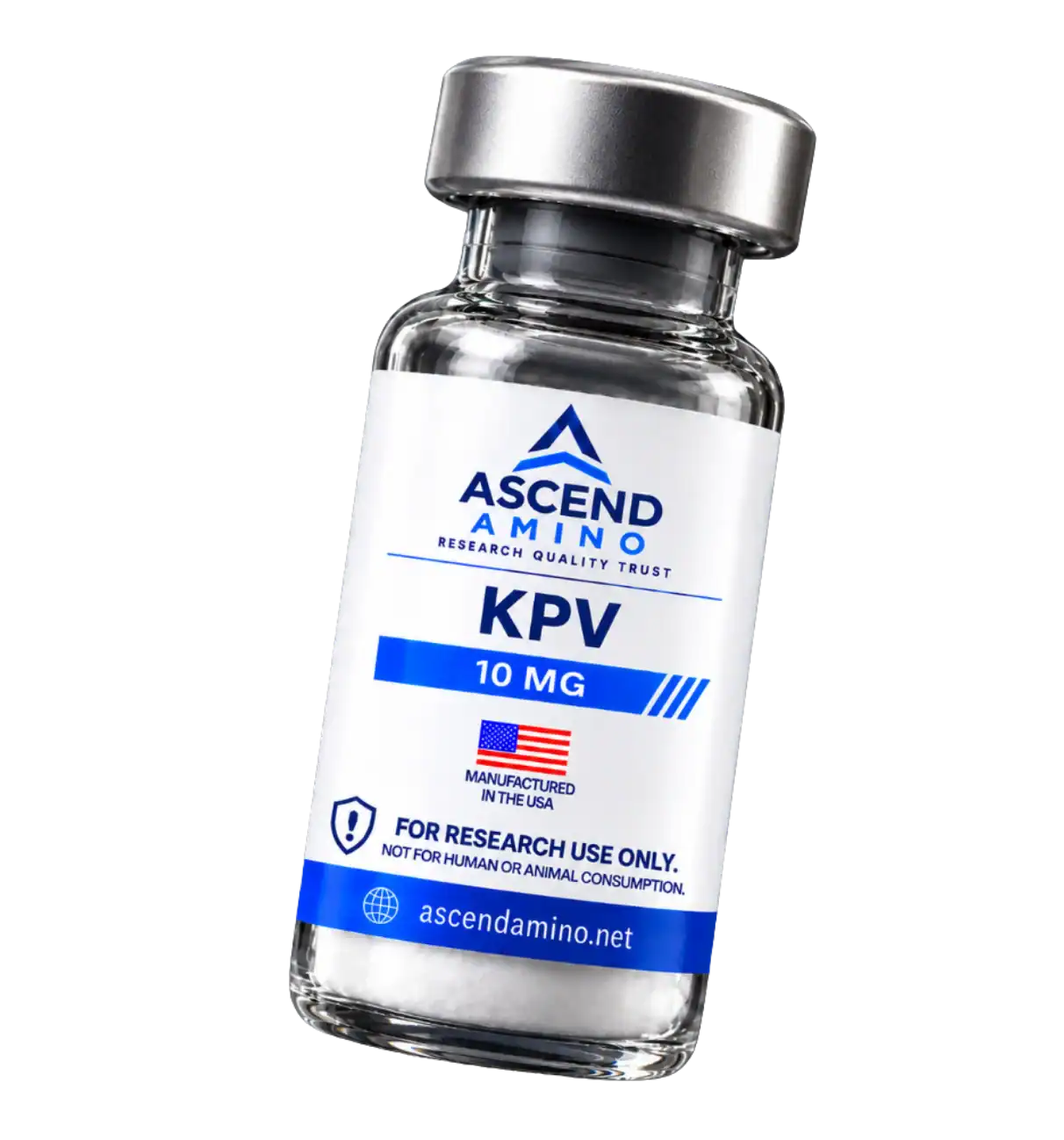
KPV 10 mg

$48.00
KPV 10mg is a synthetic tripeptide consisting of lysine, proline, and valine. It is studied for its molecular properties and potential interactions with inflammatory signaling pathways, cellular communication, and immune-related biological processes. Its small peptide structure makes it an interesting subject in biochemical and laboratory research. KPV 10mg is intended strictly for controlled scientific research and is not approved or intended for human or veterinary use.
KPV 10mg: Understanding This Tripeptide Research Compound
What Is KPV 10mg?
KPV 10mg is a synthetic tripeptide that has attracted scientific interest because of its relationship with inflammatory signaling and immune-related biological processes. KPV consists of three amino acids: lysine (K), proline (P), and valine (V). These amino acids form a short peptide sequence that researchers investigate for its molecular characteristics and interactions with biological systems.
KPV is associated with research involving alpha-melanocyte-stimulating hormone (α-MSH), a naturally occurring peptide involved in several physiological signaling processes. Scientists have examined KPV as a smaller peptide fragment with potential relevance to inflammatory pathway investigations.
The 10mg designation identifies the labeled quantity of the compound. Product identity, purity, and formulation details should be verified through supplier documentation.
Understanding the Structure of KPV
KPV has a relatively simple molecular structure compared with longer peptides. Its three-amino-acid sequence makes it a useful subject for investigating peptide structure, molecular interactions, and biological signaling.
The abbreviation KPV represents its amino acid sequence:
- K – Lysine: A positively charged amino acid involved in protein and peptide structure.
- P – Proline: An amino acid known for influencing the shape and flexibility of peptide chains.
- V – Valine: An essential amino acid involved in protein structure and biochemical processes.
Together, these amino acids form a short peptide that researchers can examine in controlled laboratory settings.
KPV and Inflammatory Signaling Research
One of the main areas of scientific interest surrounding KPV involves inflammatory signaling pathways. Inflammation is a complex biological response involving cells, signaling molecules, and communication between different parts of the immune system.
Researchers investigate how specific peptide fragments interact with these pathways to better understand cellular responses and biological regulation.
KPV has been explored in experimental research involving inflammatory mechanisms, including studies of intestinal and other tissue-related biological processes. These investigations are intended to improve scientific understanding of peptide activity rather than establish a proven treatment.
The Relationship Between KPV and Alpha-MSH
KPV is associated with alpha-melanocyte-stimulating hormone (α-MSH), a peptide that belongs to the melanocortin family.
Alpha-MSH is involved in several biological signaling processes. Researchers have investigated its relationship with inflammatory responses, cellular communication, and other physiological mechanisms.
KPV represents a smaller fragment associated with this peptide family. Studying its molecular properties helps researchers investigate whether shorter peptide sequences retain particular biological interactions.
The precise mechanisms and significance of KPV activity remain subjects of ongoing scientific investigation.
KPV 10mg in Cellular and Molecular Research
KPV is relevant to several areas of laboratory research because of its compact structure and connection to biological signaling.
Scientific investigations involving KPV may include:
- Inflammatory signaling pathways
- Peptide-receptor interactions
- Cellular communication
- Immune-related biological research
- Intestinal biology investigations
- Molecular peptide characterization
- Structure and activity studies
These research areas help scientists examine how short peptide sequences interact with biological systems. Findings from laboratory or animal studies should not be interpreted as proof of safety or effectiveness in humans.
Why KPV Is Interesting to Peptide Researchers
Short peptides are valuable research subjects because their amino acid sequences can be examined to understand how molecular structure influences biological activity.
KPV provides an example of how a small peptide fragment can become the focus of investigations involving cellular signaling and inflammatory pathways.
Its connection to the melanocortin peptide family also makes it relevant to broader research into peptide biology and molecular communication.
Continued investigation may help clarify its molecular characteristics and biological interactions.
Product Characteristics of KPV 10mg
When evaluating KPV 10mg as a research compound, laboratories should review its product specifications and available quality documentation.
Key product details include:
- Product name: KPV
- Labeled quantity: 10mg
- Amino acid sequence: Lysine-Proline-Valine
- Compound category: Synthetic tripeptide
- Research focus: Inflammatory signaling and peptide biology
- Intended setting: Controlled laboratory and scientific research
Purity, identity, storage information, and analytical testing should be confirmed using the relevant supplier documentation.
Research-Only Notice
KPV 10mg is presented strictly for controlled laboratory and scientific research purposes. It is not intended for human or veterinary consumption, injection, diagnosis, treatment, or prevention of disease. Its experimental research background does not establish clinical effectiveness or medical approval.
Final Overview
KPV 10mg is a short synthetic tripeptide composed of lysine, proline, and valine. Its connection to alpha-MSH-related research and its potential interactions with inflammatory signaling pathways make it an interesting subject in peptide science.
For laboratories investigating peptide structure, cellular communication, and inflammatory biology, KPV offers a distinct compound for scientific evaluation. Product identity, composition, and quality documentation should always be reviewed before research.
Be the first to review “KPV 10 mg”
Related products


Reviews
There are no reviews yet.