
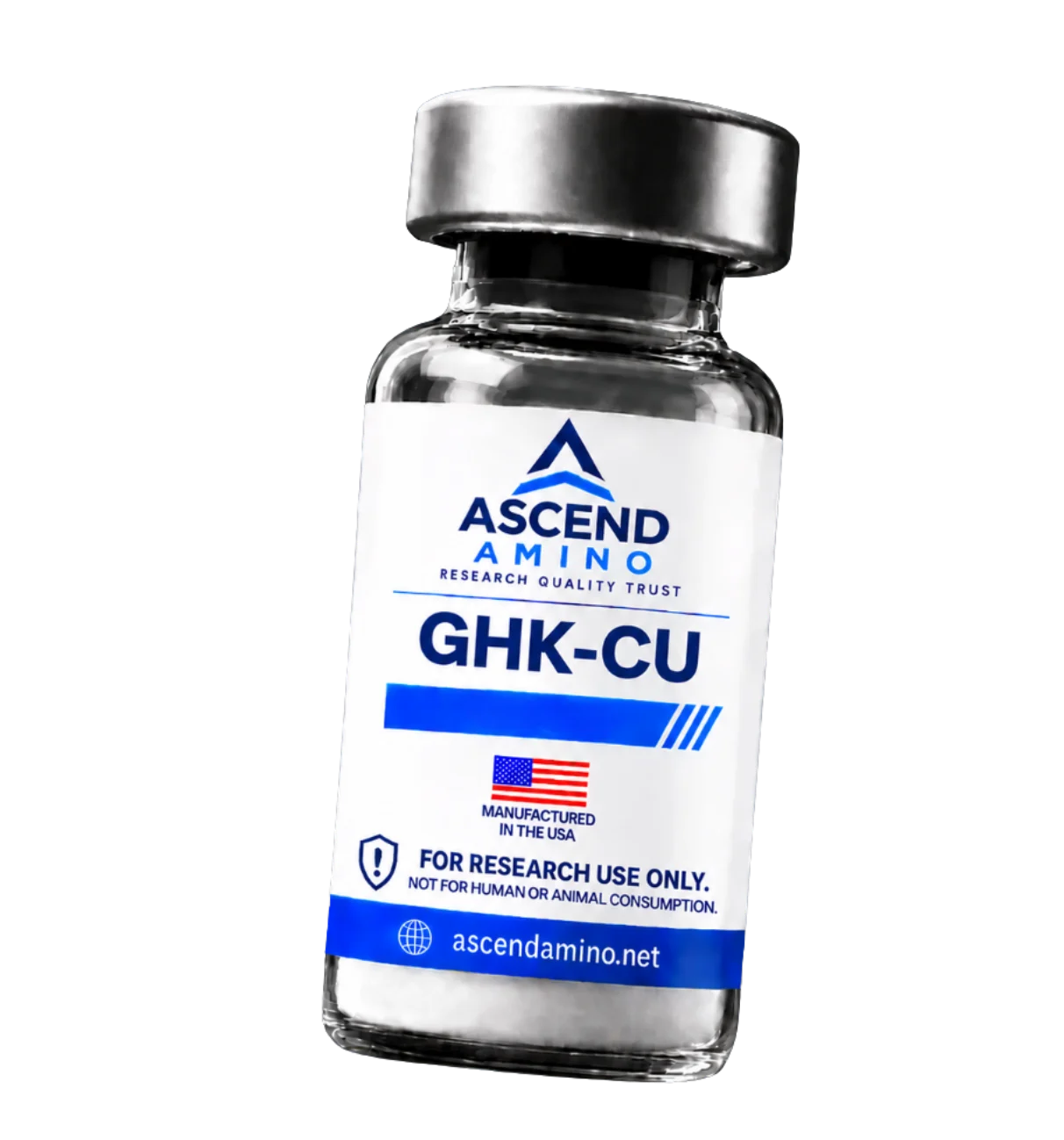
GHK Cu


Price range: $33.00 through $50.00
GHK-Cu, also known as Copper Peptide, is a naturally occurring copper-binding tripeptide studied for its role in cellular signaling, skin biology, and tissue-related research. This peptide has attracted scientific interest because of its interactions with copper and its potential involvement in various biological processes. GHK-Cu is supplied for controlled laboratory and scientific research purposes only and is not intended for human or veterinary use.
GHK-Cu: Understanding Copper Peptide Research and Its Biological Properties
What Is GHK-Cu?
GHK-Cu is a copper-binding peptide that has attracted considerable attention in scientific research involving skin biology, cellular activity, and tissue-related processes. Also called Copper Peptide, GHK-Cu consists of three amino acids: glycine, histidine, and lysine. These amino acids form the peptide sequence GHK, which can bind to a copper ion to create the GHK-Cu complex.
Researchers study this compound because copper plays an important role in several biological systems, while peptides participate in cellular communication and signaling. The combination makes GHK-Cu an interesting subject for laboratory investigations.
Understanding the Structure of Copper Peptide
The GHK portion of GHK-Cu is a short tripeptide naturally found in the human body. Its ability to bind copper is one of its defining characteristics.
Copper is an essential trace element involved in numerous biological functions, including enzyme activity and processes associated with connective tissue. GHK-Cu provides researchers with an opportunity to investigate how copper-binding peptides interact with biological systems.
The peptide’s structure and copper-binding properties are important considerations when evaluating its behavior in controlled scientific studies.
GHK-Cu and Skin Biology Research
One of the most widely explored areas of GHK-Cu research involves skin biology. Scientists have investigated how this copper peptide interacts with cellular processes associated with the skin’s extracellular matrix.
The extracellular matrix is a network of proteins and other molecules that helps provide structural support to tissues. Research involving GHK-Cu has examined its potential relationship with collagen-related pathways, cellular signaling, and other mechanisms involved in skin structure.
These investigations have contributed to interest in copper peptides within cosmetic science and laboratory research. However, experimental findings should not be interpreted as proof of a specific cosmetic or medical outcome.
Research Into Cellular Signaling and Tissue Processes
GHK-Cu is also studied for its possible involvement in cellular signaling. Peptides can interact with biological systems in different ways, making them valuable subjects for understanding communication between cells and their surrounding environment.
Researchers have explored GHK-Cu in connection with:
- Cellular signaling pathways
- Extracellular matrix biology
- Copper-related biological activity
- Collagen-associated research
- Skin and connective tissue studies
- Molecular interactions involving copper-binding peptides
These research areas remain subjects of scientific investigation. More evidence is needed to establish the precise mechanisms and determine the significance of experimental findings in humans.
Why Copper Matters in Biological Research
Copper is an essential mineral that supports several biological processes. It acts as a component of enzymes involved in different functions throughout the body.
Copper-binding compounds such as GHK-Cu are interesting to researchers because they provide a way to examine interactions between peptides and metal ions. Understanding these interactions can contribute to broader studies of molecular biology, cellular activity, and biochemical signaling.
GHK-Cu therefore represents an important subject for researchers examining the relationship between peptide structures and copper-dependent biological processes.
Important Product Characteristics
When evaluating GHK-Cu as a research compound, laboratories should consider its identity, composition, documentation, and available analytical information.
Key product details include:
- Product name: GHK-Cu
- Alternative name: Copper Peptide
- Peptide structure: Glycine-Histidine-Lysine (GHK)
- Compound type: Copper-binding tripeptide
- Research areas: Skin biology, cellular signaling, and copper-related molecular activity
- Intended setting: Controlled laboratory and scientific research
Specific information about purity, concentration, formulation, and storage should be confirmed through the relevant supplier documentation.
Research-Only Notice
GHK-Cu is described here as a subject of scientific and laboratory research. This product description does not establish that the compound is approved as a medicine or cosmetic treatment. It is not intended for human or veterinary consumption, diagnosis, treatment, or prevention of disease.
Final Overview: GHK-Cu Copper Peptide
GHK-Cu is a copper-binding tripeptide that continues to attract scientific interest because of its molecular structure and proposed interactions with cellular and tissue-related pathways. Research into its role in skin biology, extracellular matrix processes, and copper-dependent activity makes it a notable compound in peptide science.
For laboratories and scientific researchers, understanding the structure and documented characteristics of GHK-Cu provides a useful foundation for further investigation. Product identity and quality information should always be reviewed before research evaluation.
| size | 100mg, 50mg |
|---|
Be the first to review “GHK Cu”
Related products


Reviews
There are no reviews yet.