
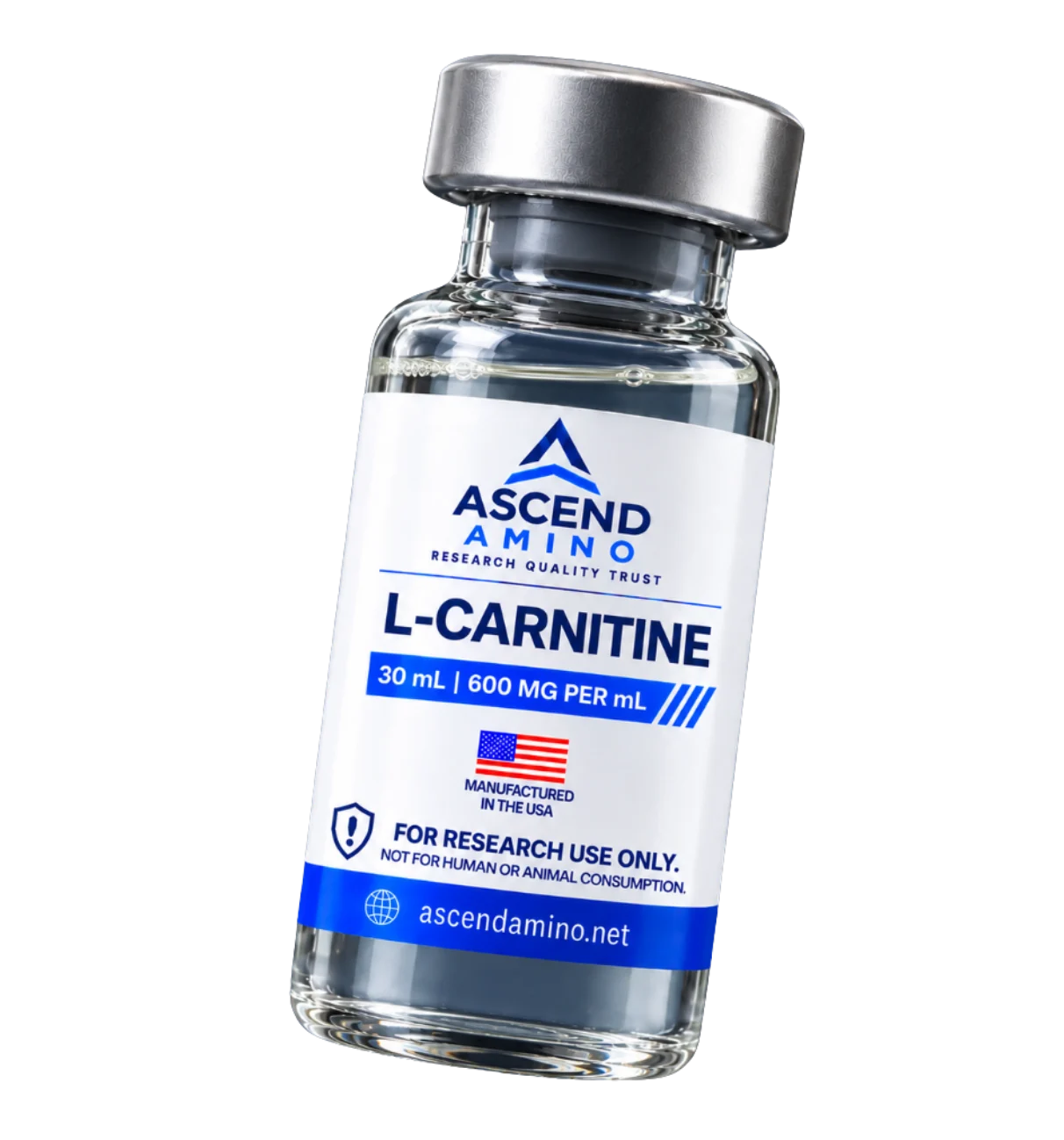
L-Carnitine 600mg/mL 30mL
$55.00
L-Carnitine 600mg/mL 30mL is a liquid formulation featuring L-Carnitine, a naturally occurring compound involved in the transport of long-chain fatty acids into mitochondria. It is widely studied for its relationship with cellular energy metabolism, fatty acid utilization, and mitochondrial function. With a labeled concentration of 600mg per mL and a total volume of 30mL, this product is relevant to biochemical and metabolic research. Formulation details and intended-use restrictions should be verified from the supplier’s documentation.
L-Carnitine 600mg/mL 30mL: Understanding Its Role in Cellular Energy Research
What Is L-Carnitine 600mg/mL 30mL?
L-Carnitine 600mg/mL 30mL is a liquid formulation containing L-Carnitine, a naturally occurring compound that plays an important role in cellular energy metabolism. It has attracted scientific interest because of its involvement in transporting certain fatty acids into mitochondria, where they can undergo oxidation and contribute to energy production.
L-Carnitine is synthesized in the body from the amino acids lysine and methionine. It is also obtained through dietary sources, particularly animal-based foods. Researchers continue to investigate its biological functions and its relationship with metabolic processes.
The product label identifies a concentration of 600mg per milliliter and a total volume of 30mL. This corresponds to 18,000mg of L-Carnitine across the container if the stated concentration applies throughout the full volume.
Understanding How L-Carnitine Works
One of the most important functions of L-Carnitine involves the transport of long-chain fatty acids across the inner mitochondrial membrane.
Mitochondria are specialized structures inside cells that participate in energy production. Long-chain fatty acids cannot independently cross the inner mitochondrial membrane efficiently. The carnitine transport system helps move these fatty acids into the mitochondrial matrix, where they can undergo beta-oxidation.
This process allows cells to use fatty acids as an energy source under appropriate metabolic conditions.
L-Carnitine and Mitochondrial Energy Metabolism
L-Carnitine is closely associated with mitochondrial function because of its involvement in fatty acid transport. Its biological activity makes it an important subject in research involving cellular metabolism and energy regulation.
Scientists investigate how carnitine availability relates to fatty acid oxidation, mitochondrial activity, and metabolic balance.
These studies help explain the relationship between nutrient metabolism and cellular energy production. However, the presence of L-Carnitine in a formulation does not guarantee increased energy, improved physical performance, or weight loss.
The Role of L-Carnitine in Fatty Acid Transport
Fatty acids are important energy sources used by many tissues throughout the body. Before long-chain fatty acids can be oxidized inside mitochondria, they must pass through a transport process involving several enzymes and carnitine-related molecules.
The carnitine shuttle includes important components such as carnitine palmitoyltransferase I, carnitine-acylcarnitine translocase, and carnitine palmitoyltransferase II.
L-Carnitine participates in this transport system by helping facilitate the movement of fatty acid groups into mitochondria.
Research into this pathway contributes to a broader understanding of how cells process fats and regulate energy metabolism.
L-Carnitine and Metabolic Research
Beyond fatty acid transport, L-Carnitine is studied in connection with several areas of biochemical research, including:
- Mitochondrial energy metabolism
- Fatty acid oxidation
- Cellular metabolic regulation
- Carnitine transport mechanisms
- Nutrient metabolism
- Mitochondrial biology
These research areas help scientists understand how carnitine participates in normal metabolic processes and how its availability may influence different biological systems.
Scientific findings vary depending on the population, formulation, and research conditions. They should not be interpreted as proof that every L-Carnitine product produces a specific health or fitness outcome.
Understanding the Product Concentration
The labeled concentration of this product is 600mg/mL, with a total container volume of 30mL.
Key product details include:
- Product name: L-Carnitine
- Concentration: 600mg/mL
- Container volume: 30mL
- Calculated total content: 18,000mg
- Compound category: Amino acid-derived metabolic compound
- Research focus: Fatty acid transport and mitochondrial energy metabolism
The exact formulation, ingredients, route restrictions, and storage requirements should be confirmed through the manufacturer’s documentation. The concentration alone does not establish that a product is suitable for any particular route of administration.
Why L-Carnitine Remains Scientifically Important
L-Carnitine continues to be an important subject in nutritional biochemistry and metabolic research because it connects fatty acid utilization with mitochondrial energy production.
Its role in the carnitine shuttle makes it particularly relevant to investigations into how cells transport and process long-chain fatty acids.
Understanding these pathways can contribute to broader scientific knowledge of metabolism, cellular energy, and mitochondrial function.
Important Product Information
This description provides general scientific information and does not establish medical effectiveness. The product’s regulatory status and intended use depend on its actual formulation and manufacturer documentation. Do not assume that a research or laboratory formulation is approved for human or veterinary use.
Final Overview
L-Carnitine 600mg/mL 30mL features a compound with an established role in fatty acid transport and cellular energy metabolism. Its involvement in mitochondrial processes makes it a notable subject in biochemical and metabolic research.
For accurate product evaluation, verify the labeled concentration, total content, formulation, quality documentation, and applicable product-use restrictions.
Be the first to review “L-Carnitine 600mg/mL 30mL”
Related products
PEPTIDES




PEPTIDES
Reviews
There are no reviews yet.